



Orthodontic braces are a dental technique that helps move misaligned teeth into their correct positions on the dental arch, thanks to the pulling force from specialized orthodontic appliances. Although most effective between the ages of 6–8, adults, including those aged 36 or 40, can still get braces and achieve significant treatment results if done correctly.
Can a 40-year-old get braces?
Getting braces at age 40 is entirely feasible and is gradually becoming a popular oral care trend among many adults. Currently, there is no specific age limit for getting braces, as long as you have healthy teeth and meet the general health requirements.
At 40, adults can still undergo orthodontic treatment to correct overbite, underbite, gaps, misaligned teeth, or malocclusion. This procedure helps improve the dental structure, thereby creating a harmonious smile and a more balanced facial appearance.
Benefits of getting braces after turning 40:
Enhanced Aesthetics: A radiant smile with straight, properly aligned teeth.
Improved Pronunciation: When teeth are correctly aligned, speech becomes clearer and more fluent.
Effective Chewing Support: Correcting the bite makes chewing and swallowing easier, leading to better nutrient absorption.
Optimized Oral Hygiene: When teeth are aligned, brushing and cleaning between teeth become easier, reducing the risk of oral diseases such as gingivitis, tooth decay, or periodontitis.

To ensure high effectiveness of the orthodontic process, individuals aged 40 need to pay attention to:
Strong dental foundation: There should be a sufficient number of teeth, with no significant looseness or tooth loss.
Thorough pre-orthodontic treatment: Eliminate potential influencing factors such as periodontitis or tooth decay before starting orthodontics.
Complete dental X-rays: Helps the dentist assess the condition of misaligned teeth, impacted teeth, or jawbone loss, thereby predicting tooth movement direction and developing an appropriate treatment plan.
Choosing the right dental facility plays a crucial role in ensuring successful orthodontic results. Seek out clinics with experienced dentists who have in-depth knowledge of orthodontics. The dentist will conduct a general examination and create a detailed, personalized treatment plan for each case, ensuring the best possible outcome.

Does getting braces at 40 take a long time?
Getting braces for a 40-year-old is entirely possible, but the treatment duration will typically be longer compared to teenagers. This is because, at this age, the jawbone structure is fully developed and stable, making tooth movement more challenging. This requires patients to have high patience, possibly 3–4 times more than younger individuals.
In modern orthodontics, the rate of tooth movement in younger individuals can reach about 0.5–1 mm per month. For middle-aged individuals, especially those aged 40, this rate tends to slow down due to individual body characteristics and oral health conditions. Therefore, treatment duration can extend beyond 2 years, depending on the severity of misalignment and the biological response of each person throughout the treatment course.
How much do braces cost for a 40-year-old?
Getting braces at 40 is no longer uncommon, especially for those looking to improve aesthetics and chewing function. However, the cost of braces at this age will depend on the orthodontic method you choose. Below is a detailed price list for braces at My Auris dental clinic – a reputable facility with an experienced team of dentists and modern technology.
Price list for adult braces
| Service | Estimated Cost |
| Braces (Fixed Appliances) | |
| Metal Braces | 60,000,000 VND – 75,000,000 VND |
| Ceramic Braces | 75,000,000 VND – 90,000,000 VND |
| Meaw Arch Braces (multi-loop archwire technique) | 80,000,000 VND – 90,000,000 VND |
| Clear Aligners | 62,500,000 VND – 137,500,000 VND |
| Retainers | |
| Vivera Retainers | 10,000,000 VND |
| Other Retainer Types | 3,500,000 VND – 5,000,000 VND |
The above costs do not include additional services such as: wisdom tooth extraction, premolar extraction, periodontal treatment, scaling and root planing, etc. These factors will be discussed in detail by the dentist after examination.
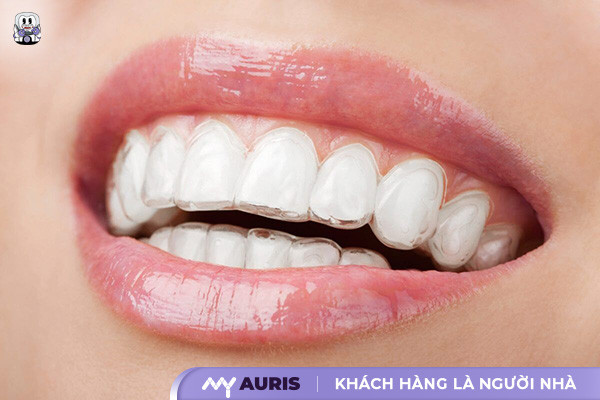
Modern Aesthetic Solutions for 40-Year-Olds
Nowadays, many 40-year-olds are getting braces to improve their oral health and enhance aesthetics. Among the currently available methods, Invisalign clear aligners are considered a superior choice due to their ability to effectively treat cases of varying complexity – from simple to complex – while ensuring aesthetic appeal and convenience.
Invisalign aligners are made from high-quality dental-grade flexible plastic, offering almost complete transparency. This allows patients to wear them confidently without worrying about the aligners being noticeable in daily interactions. Furthermore, the wearing sensation is gentle and comfortable, avoiding the bulkiness or discomfort associated with traditional braces.
A special feature is that the aligners are custom-designed to each patient’s precise measurements, ensuring they fit snugly over the teeth, providing stability, and minimizing impact on speech. Additionally, the easy-to-remove design offers greater convenience for users in terms of oral hygiene and eating, preventing oral injuries such as gum abrasions or dislodged brackets.
However, a notable drawback is that the corrective force of Invisalign aligners is somewhat lighter than that of fixed braces, which may result in a longer treatment duration. Nevertheless, in return, patients will experience a gentler, more aesthetic, and more flexible treatment process.
More importantly, this method has no age limit. As long as the patient has stable oral health and general health, getting braces at age 40 or older is entirely feasible, significantly improving oral conditions and enhancing quality of life.