


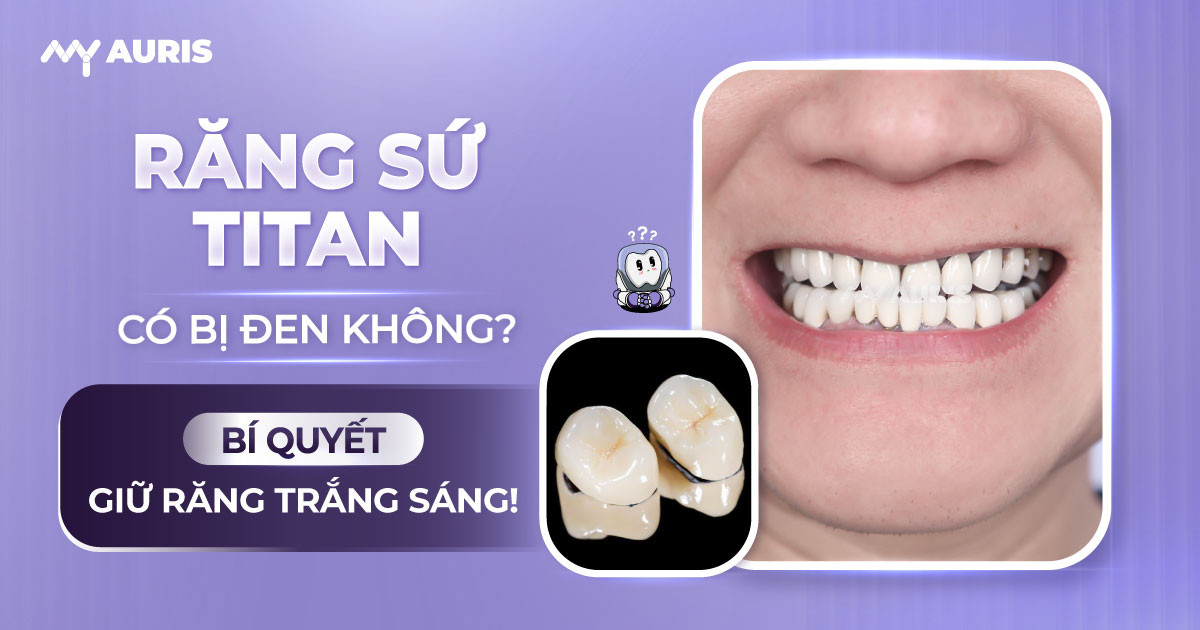
Many wonder if Titanium porcelain teeth turn black, affecting the aesthetics of their smile. This issue requires a clear explanation to help you make an informed decision when choosing dental restorations. This article from My Auris provides accurate information, based on dental experience, answering the question of whether Titanium porcelain teeth develop black gum lines, while also analyzing the advantages and disadvantages of this material.
Addressing the question: Do Titanium porcelain teeth turn black?
Titanium porcelain teeth belong to the metal-ceramic crown group, featuring a framework made of titanium alloy and an outer layer of porcelain. The titanium framework is lighter and has better biocompatibility than conventional metals. Titanium porcelain teeth are at risk of developing black gum lines. The main cause of black gum lines is the oxidation of titanium metal in the oral environment. This oxidation process is slow, but over time, titanium metal can oxidize, producing grayish-black byproducts. These byproducts accumulate at the gum line, leading to the appearance of black gum lines, affecting the aesthetic of the porcelain crown. The gums also play a crucial role. Gum recession exposes the titanium metal framework, making the black line more noticeable.
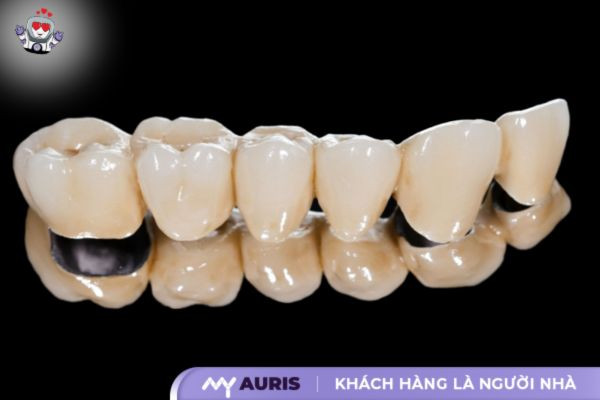
Explaining the main reasons why titanium porcelain teeth turn black
The primary cause of black gum lines in titanium porcelain teeth is the oxidation of titanium metal. The internal titanium metal framework, despite being covered by a porcelain layer, can still oxidize when exposed to the oral environment. The oxidation process occurs because Titanium metal, a component of the titanium alloy forming the framework of titanium porcelain crowns, when in contact with oxygen in the oral environment, will create an oxidation reaction. This reaction forms a thin layer of titanium oxide on the metal surface. This oxide layer initially does not appear black and even serves to protect the metal from further corrosion. However, in the complex oral environment, this oxide layer can transform, forming grayish-black titanium oxides, which are the main cause of the black gum line phenomenon.
Other factors contributing to titanium porcelain teeth turning black:
Periodontal health: Unhealthy gums or periodontitis create conditions for titanium oxides to penetrate faster, making the black line more prominent. Proper oral hygiene after receiving porcelain crowns helps reduce this risk.
Dental cement: Low-quality cement can easily become loose, creating gaps for bacteria and saliva to penetrate, accelerating the oxidation of the titanium framework. A dentist at a reputable dental clinic will use quality dental materials and precise bonding techniques to minimize risks.
Natural tooth abutment: A poorly prepared natural tooth abutment can also contribute to titanium porcelain teeth turning black. The dentist must ensure the abutment is thoroughly treated and fits tightly with the titanium framework to prevent bacterial infiltration.
Effect of metal in the oral environment: The oral environment is acidic and highly humid, creating favorable conditions for the oxidation of dental alloys, including Titanium alloys.
Gum Recession and Other Factors Making Titanium Porcelain Teeth’s Black Line More Visible
Are you worried that the gum line of your titanium porcelain teeth will turn black, affecting your smile? The truth is, titanium porcelain teeth are at risk of developing black gum lines. Understanding the causes will help you make an informed decision when choosing aesthetic dental restorations. This article explains in detail the reasons why the black line becomes more visible, focusing on gum recession and other factors.
Gum Recession
Healthy, firm gums cover the titanium metal margin beneath the porcelain layer. When gums recede, the titanium framework is exposed, initiating the oxidation process. The oxidation of titanium metal creates a grayish-black color, forming a black line around the porcelain crown. Gum recession can be due to various causes:
Poor oral hygiene: Periodontal inflammation, plaque accumulation, and bacterial attack on the gums cause inflammation, swelling, and ultimately gum recession. Proper oral care is mandatory after porcelain crown restoration.
Improper restoration technique: Ill-fitting titanium porcelain crowns can cause friction and damage to the gums. Choosing a reputable dental clinic with a skilled dentist ensures precise restoration, minimizing the risk of gum recession.
Genetic factors: Some individuals have naturally thin gums, making them more prone to recession. Consult a dentist for appropriate preventive and dental treatment measures.
Systemic diseases: Diabetes and cardiovascular diseases also affect gum health, increasing the risk of gum recession.
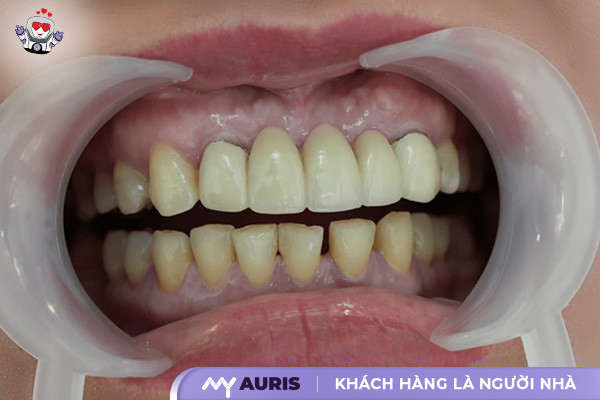
Other Factors Causing Black Gum Lines
Besides gum recession, several other factors contribute to the visibility of black lines:
Thin porcelain layer: A thin outer porcelain layer may not adequately cover the titanium framework, especially when light shines through. Quality porcelain crowns with a thick porcelain layer help maintain a bright white color, ensure color stability, resist staining, and provide high aesthetics.
Dental cement: Low-quality dental cement can become discolored and visible through the porcelain layer, especially at the gum line. Quality dental materials ensure the aesthetic appeal and longevity of the restoration.
Effect of food: Regular consumption of colored foods and beverages (coffee, tea, red wine) can stain the porcelain layer, making the black line more noticeable. Limiting the consumption of these substances helps porcelain crowns maintain their bright white color for longer.
Metal oxidation: Titanium metal, despite its good biocompatibility, still oxidizes in the oral environment. This process is slow, but over time it will cause black gum lines. All-ceramic crowns, which do not turn black, are an alternative for those concerned about this issue.
Can black gum lines in titanium porcelain teeth be prevented and remedied?
Preventing Black Gum Lines
Prevention is better than cure; preventing black gum lines is more effective than remedying them.
Choosing quality dental materials: Prioritize high-quality titanium alloys to limit the oxidation process. Consult a dentist about good titanium porcelain crown types that offer color stability, stain resistance, and high aesthetics.
Precise dental restoration technique: The dentist’s technique plays a decisive role. The outer porcelain layer must fit tightly and completely cover the titanium framework. The dental cement must be of high quality to prevent saliva infiltration. Aesthetic dental restoration requires advanced techniques and skilled dentists.
Proper oral hygiene: Healthy gums help maintain a bright white color and prevent gum recession. Brushing correctly, flossing, rinsing, and regular dental check-ups are essential. Post-porcelain crown oral care is very important.
Remedying Black Gum Lines
If titanium porcelain teeth have already developed black gum lines, there are several solutions:
Replacing titanium porcelain crowns: The radical solution is to replace them with all-ceramic crowns (e.g., Zirconia porcelain crowns). All-ceramic crowns do not turn black and maintain their bright white color long-term. However, their cost is higher than titanium porcelain crowns.
Gum contouring surgery: If the cause is gum recession, gum contouring surgery can cover the black margin. The dentist will assess the condition of the gums to provide an appropriate dental treatment plan.
Re-fabricating titanium porcelain crowns: In some cases, the dentist may re-fabricate the titanium porcelain crown, ensuring complete coverage of the metal framework.
Detailed comparison of titanium porcelain teeth and all-ceramic teeth
Titanium porcelain teeth pose potential risks
Metal-ceramic crowns, or titanium porcelain crowns, consist of a titanium metal framework and an outer porcelain layer. Their biggest advantage is lower cost compared to all-ceramic crowns. They offer high durability and relatively good longevity. Titanium porcelain crowns are lighter than conventional metal-ceramic crowns and have better biocompatibility than common metals. However, titanium porcelain crowns are at risk of developing black gum lines due to the oxidation of titanium metal. The blackened gum line affects the aesthetics of the porcelain crown, making the smile less confident.

All-ceramic crowns do not turn black
All-ceramic crowns are made entirely from dental porcelain, without a metal framework. Their outstanding advantages include maintaining a bright white color, stable shade, resistance to staining, and high aesthetics. They do not develop black gum lines like titanium porcelain crowns, ensuring long-lasting smile aesthetics. Zirconia all-ceramic crowns are a typical example of high-end all-ceramic crowns. They offer high durability, excellent biocompatibility, and are safe for the gums.
Detailed comparison of titanium porcelain teeth and all-ceramic teeth
| Feature | Titanium Porcelain Crowns | All-Ceramic Crowns |
| Material | Titanium alloy framework, outer porcelain layer | 100% dental porcelain |
| Color | Risk of black gum lines | Does not turn black, maintains bright white color |
| Durability | High durability | High durability |
| Cost | Medium cost | Higher cost |
| Aesthetics | Aesthetic, but can be affected by titanium oxidation | High aesthetics, natural |
| Lifespan | Relatively good | High |
| Biocompatibility | Better than common metals | Very good |
| Thermal conductivity | Higher than all-ceramic crowns | Low, good insulation |
| Specific weight | Lighter than conventional metal-ceramic crowns | Light |
When should Titanium porcelain crowns be considered despite the possibility of black gum lines?
Below are situations where you should consider titanium porcelain crowns, accepting some aesthetic risk in exchange for other benefits:
Cost is the top priority
You need dental prostheses to restore basic chewing function and aesthetics but have a limited budget. All-ceramic crowns, with their high aesthetics, typically come at a significantly higher cost.
Titanium porcelain crowns have a medium cost, much lower than all-ceramic crowns like Zirconia or Emax. The framework made of titanium alloy helps reduce the price compared to premium all-ceramic materials.
Individuals who need dental restorations but have limited financial resources. This is a balanced choice between effectiveness and cost. You accept a small possibility of the gum line darkening over time to save a significant amount of money. It is crucial to discuss thoroughly with your dentist at the dental clinic to understand the expected lifespan and potential color changes.

Restoring teeth in positions that do not require exceptionally high aesthetics
You need a crown or bridge for your posterior teeth – those that are less visible when smiling or speaking.
If black gum lines occur on posterior teeth, they will have less impact on the overall aesthetics of the smile compared to anterior teeth. Titanium porcelain crowns ensure high durability and good chewing force resistance for posterior teeth, which are the primary load-bearing areas. The outer porcelain layer still provides an acceptable color match with natural teeth.
Individuals who need dental porcelain for molars and premolars. The priority here is function and high durability rather than perfect aesthetics, as is the case for anterior teeth. You need a dental material strong enough for daily chewing.
Requirements for durability and strength when making a dental bridge
You have multiple adjacent missing teeth and need a long porcelain bridge to span the gap. A long bridge requires an extremely robust framework to withstand significant chewing forces and prevent fracture.
A titanium framework (a type of dental alloy) provides high durability and better flexural strength than some monolithic all-ceramic crowns, especially in cases of excessively long bridges. The titanium metal framework helps distribute chewing forces evenly, increasing the lifespan of the aesthetic dental restoration. Although there is a risk of black gum lines, the rigidity of the titanium framework is a decisive factor in this situation.
Patients needing long dental bridges (3-4 units or more). Individuals with strong chewing forces. The dentist will assess chewing forces and the missing tooth span to determine the appropriate dental material, and titanium porcelain crowns are often a strong mechanical consideration.
Individuals with slight metal sensitivity
You have a sensitive constitution or are concerned about your body’s reaction to metals, but cannot afford all-ceramic crowns. Conventional metal-ceramic crowns (often containing Nickel, Chromium) have a higher potential to cause allergies or gum irritation.
The titanium alloy used in titanium porcelain crowns is renowned for its better biocompatibility compared to common metals. Titanium is less likely to cause negative reactions in soft tissues and gums, reducing the risk of gingivitis or allergies compared to other dental alloys. Although still a metal-ceramic crown, the biocompatibility aspect of Titanium is a significant advantage. It is also lighter than conventional metal-ceramic crowns due to its lower specific weight.
Individuals with slight metal sensitivity who still prioritize cost. Those who want a safer option than conventional metal-ceramic crowns without investing in all-ceramic crowns.