


A bright white smile not only enhances a radiant grin but also reflects your overall health. However, in daily life, teeth are very prone to discoloration due to the effects of coffee, strong tea, tobacco, or dark-colored foods. This is a common condition that makes many people lose confidence in communication. So, are there any simple yet effective ways to deal with this at home? This article from My Auris will share natural, easy-to-apply tips to remove yellow stains from teeth, helping you quickly regain healthy white teeth and a bright smile.
Causes of Yellow Stains on Teeth
Before exploring teeth whitening methods, let’s discover the common causes of tooth discoloration. Some frequently encountered factors include:
Food & Drinks: Items like curry, coffee, tea, red wine, or colored soft drinks can easily leave stains on tooth surfaces.
Improper Oral Hygiene: Irregular brushing leads to plaque and bacteria buildup, causing tooth discoloration.
Smoking: The nicotine in tobacco not only harms health but also darkens teeth, forming stubborn stains.
Health Issues: Certain conditions like dry mouth, hormonal changes, or medication use can affect tooth color.
Therefore, choosing a safe and suitable tooth whitening solution is essential.
Using Baking Soda for Teeth Whitening
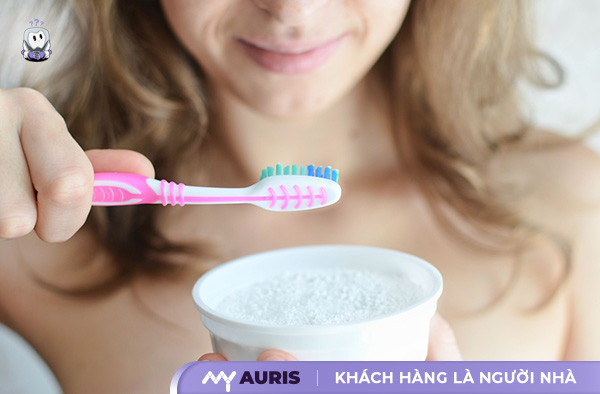
If you’re looking for ways to remove yellow stains and plaque from your teeth, using Baking Soda is a top choice recommended by many dentists. With its mild abrasive properties, baking soda helps remove plaque and effectively whitens teeth without harming tooth enamel – which is crucial for long-term oral care.
Simple Steps:
Mix baking soda with water in a 1:1 ratio to create a thick paste.
Dip your toothbrush into the paste, then gently brush it onto your tooth surfaces.
Perform this action for 2 minutes, ensuring all tooth surfaces are brushed evenly.
Finally, rinse your mouth thoroughly with water to remove any remaining baking soda.
Important Notes:
Absolutely do not use too much baking soda, as it can damage tooth enamel.
Absolutely do not brush too vigorously, as abrading the enamel will make teeth weaker and more sensitive.
Using Fresh Strawberries
If you’re looking for a natural teeth whitening method, try using fresh strawberries – a fruit that is not only delicious but also extremely effective in improving tooth color. Strawberries contain malic acid, a natural tooth cleaner and whitener that gently removes stains from teeth.
How to Whiten Teeth with Strawberries
- Choose 1-2 fresh strawberries, wash them, then mash them.
- Apply the mashed strawberries to your teeth and leave for about 5 minutes.
- Afterward, brush your teeth with toothpaste to thoroughly clean off any remaining acid and plaque.
Notes on Using Strawberries for Teeth Whitening
Since strawberries are acidic, they should not be used too frequently to avoid eroding tooth enamel. Dental professionals recommend applying this method only 1-2 times per week to achieve safe whitening results without affecting oral health.
In addition to stain removal, the components in strawberries also provide vitamin C, which helps maintain healthy gums and boosts oral immunity. This is why many dentists encourage using strawberries for teeth whitening as an effective and economical home remedy.
Using Lemon
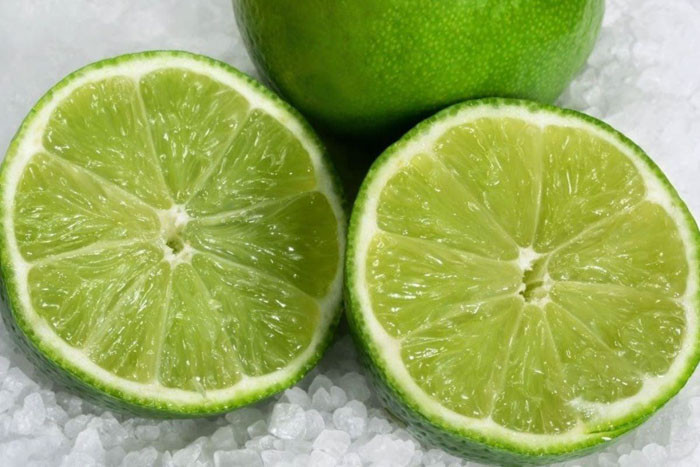
Among home teeth whitening tips, using lemon is a popular method thanks to the strong natural acidity in this fruit. Lemon not only effectively brightens tooth color but is also particularly useful for stubborn yellow stains caused by coffee, tea, or tobacco. However, due to the strong acid in lemon, you need to use it carefully to avoid damaging tooth enamel if used too much or incorrectly.
How to do it:
- Cut the lemon into thin slices, then gently rub them onto your teeth for about 1-2 minutes.
- Next, rinse your mouth with clean water to remove excess acid.
- You can also mix lemon juice with a little salt and use it as a daily mouthwash, helping to make your teeth strong and naturally bright.
Important Notes:
Do not leave lemon juice on your teeth for too long, as the acid can damage tooth enamel and make teeth sensitive.
Brush your teeth immediately after use to protect enamel and minimize unwanted effects.
Tip: Using Activated Charcoal
Activated charcoal is not only known for its detoxifying properties but also as an effective teeth whitening method, recommended by many dental professionals. Thanks to its ability to absorb impurities and dirt, it helps remove yellow stains, brightens teeth, and gives you a confident smile.
How to Whiten Teeth with Activated Charcoal
- Step 1: Take a small amount of pure activated charcoal, then mix it with water to form a paste.
- Step 2: Dip your toothbrush into the paste, then gently brush it onto your teeth for 2 minutes.
- Step 3: Rinse your mouth thoroughly with warm water to remove any remaining charcoal.
Notes on Using Activated Charcoal
- Use activated charcoal in moderation; do not apply too frequently (only 1-2 times/week).
- Overuse can cause tooth abrasion if misused, affecting natural tooth enamel.
Reasons for Activated Charcoal’s Effectiveness
Activated charcoal acts like a natural magnet, drawing impurities and bacteria from the tooth surface, helping to remove plaque – the main cause of yellowing and bad breath. This is a simple yet highly effective tip for using activated charcoal, suitable for anyone looking for safe at-home oral care.
Tip: Using Sea Salt
Using sea salt is a safe and effective method for natural teeth whitening. Sea salt not only cleans teeth but also has antibacterial properties, which are excellent for preventing gum disease.
Making a sea salt mouthwash is very simple: mix sea salt in warm water and use it to rinse your mouth daily. Additionally, you can gently rub sea salt onto your teeth for enhanced cleaning and more effective plaque removal.
Note when using sea salt that it can cause dry mouth, so drink water afterward to keep your oral cavity moist and avoid discomfort.
Long-term use of sea salt not only helps whiten teeth but also improves overall oral health, reduces gum inflammation, and keeps breath fresh, providing a pleasant feeling all day long. This is truly a natural oral care tip you should apply daily.
Using Peroxide-Containing Toothpaste
The tip of using peroxide-containing toothpaste is an effective teeth whitening method recommended by many dental professionals. Hydrogen peroxide, a natural compound, can effectively whiten teeth by cleaning tooth stains and safely brightening enamel. Currently, many toothpastes incorporate peroxide to help teeth become brighter every day, creating a natural white look.
The application is very simple: just choose a peroxide-containing toothpaste and use it daily as usual. Additionally, to enhance effectiveness, you can dilute peroxide with water and rinse your mouth daily. However, while peroxide is effective, it should not be overused as it can cause irritation if used excessively.
After a period of use, you will notice a significant difference in tooth color, with brighter teeth and fading stains. This is a safe, easy-to-apply tip that helps improve dental aesthetics while protecting healthy tooth enamel.

Drink Plenty of Water
An easy but extremely effective method for protecting teeth from yellow stains is to drink plenty of water daily. When you drink enough water, you are supporting the process of washing away plaque on your teeth, while also preventing bacterial buildup – two common causes that help minimize yellow stains on teeth.
Effective Implementation Tips from Experts:
- Drink at least 8 glasses of water every day to ensure your oral cavity stays clean and gum moisture is maintained stably.
- After eating or enjoying stain-causing beverages like coffee or tea, you should rinse your mouth with water after eating, after drinking coffee, or after drinking tea to minimize adhesion to teeth and keep them white and bright.
Limit sugary drinks and dark-colored beverages like soda, red wine, or dark juices, as these are the most common causes of tooth stains.
Eat Teeth-Whitening Foods
A balanced diet is not only beneficial for overall health but also plays a crucial role in maintaining white, bright, and strong teeth. Foods like apples, carrots, cucumbers, and celery are not only rich in nutrients but also have a natural cleaning effect, gently and safely removing yellow stains from teeth.
How to do it:
Eat these teeth-whitening foods regularly, especially after meals. This is an ideal time to help naturally clean teeth and limit the accumulation of bacteria and plaque. Chewing fibrous carrots or celery also helps stimulate saliva production, thereby continuously promoting saliva secretion – an important factor in washing away plaque and keeping tooth surfaces clean and bright.
Celery and carrots act like natural toothbrushes, reaching into and effectively cleaning between teeth. Cucumbers and apples contain plenty of water and vitamins, which can provide essential vitamins for oral health. The chewing process promotes circulation and helps keep teeth clean, limiting the formation of new plaque.
Avoid Hard Chewing Habits
One of the silent causes of tooth enamel damage is the habit of chewing hard foods like ice cubes, nuts, or overly hard snacks. This seemingly harmless action creates conditions for stains to adhere, causing teeth to dull and lose their natural shine. In the long run, teeth wearing down over time can also lead to many serious dental problems.
Effective Solutions:
- Limit chewing ice, hard candies, or foods that can easily chip tooth enamel.
- Try to change daily chewing habits to reduce the force exerted on teeth.
- When thirsty, drink cold water instead of chewing ice – a simple yet extremely helpful solution.
Protecting tooth enamel helps prevent tooth wear, thereby inhibiting stain formation and keeping teeth shiny and healthy for a long time. Maintaining intact enamel not only improves aesthetics but also helps prevent sensitivity and tooth decay.
Regular Dental Check-ups
While helpful natural methods can assist you with daily oral care, regular dental check-ups are still an indispensable step to maintain healthy teeth long-term. During each examination, the dentist will check your overall oral health and clean stubborn plaque – debris firmly attached to your teeth that you cannot remove with regular brushing.
How to do it: Don’t forget to schedule an appointment with your dentist at least every 6 months. This process not only provides deep oral cleaning but also helps you proactively monitor your gum and tooth health.
Note: During the examination, the dentist will advise on the appropriate teeth whitening method for your current tooth condition, avoiding enamel damage.

Safe Ways to Clean Black Plaque at the Gumline
Black plaque at the gumline not only causes aesthetic concerns but also affects oral health. Here are effective, easy-to-do at-home methods to clean black plaque at the gumline, helping you maintain bright, strong teeth.
Brush Twice Daily with Fluoride Toothpaste
This is the first and most crucial step. Brushing twice daily for at least 2 minutes each time with fluoride toothpaste will help prevent plaque formation at the gumline. Brush all surfaces evenly, especially the area near the gums – where black plaque easily accumulates.
Clean Gumline Plaque with Fresh Lemon
Lemon has a powerful cleaning effect due to its natural acidity. You can effectively remove plaque with lemon, and also remove yellow stains from teeth with lemon. If your gumline has yellow plaque or is discolored, use lemon to clean plaque as follows:
- Take a fresh lemon and squeeze out its juice.
- Dip a toothbrush into this solution and gently brush your teeth.
- Brush your teeth vertically so that the lemon juice solution evenly contacts the surfaces and interdental spaces, effectively cleaning dental plaque.
- Finally, rinse your mouth with water.
Note: Do not overuse too frequently to avoid eroding tooth enamel.
Remove Gumline Plaque with Salt
Fine salt is an inexpensive yet extremely effective ingredient. The cleaning action of salt, combined with its ability to remove oral bacteria, will better prevent oral diseases. You can:
- Sprinkle salt onto your toothbrush and brush as usual.
- Alternatively, mix salt with lemon juice, then gently brush your teeth for a few minutes.
Perform this daily to increase the effectiveness of cleaning plaque from teeth.
Effectively Clean Dental Plaque with Baking Soda
Baking soda has the ability to clean and improve tooth color. Here’s how to use it:
- Brush baking soda directly onto your teeth.
- Alternatively, mix baking soda with lemon juice to form a paste, creating a powerful cleaning mixture.
- After a few minutes of brushing, you will notice brighter, cleaner teeth.
Only apply twice a week to protect tooth enamel.
Use Dental Floss Regularly
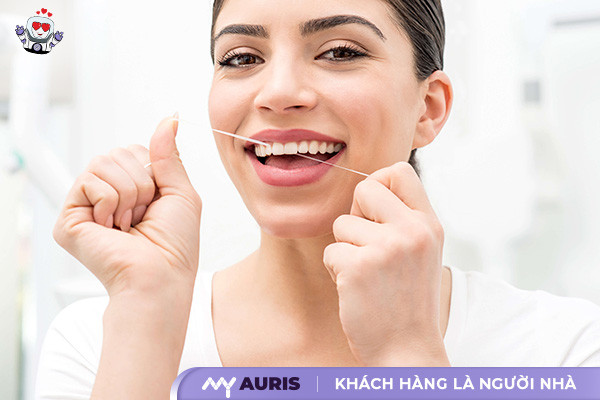
Regular toothbrushes only clean tooth surfaces, while interdental spaces are often missed. Therefore, regular use of dental floss in your daily oral hygiene routine is indispensable. It helps:
- Clean tooth surfaces with a toothbrush.
- Remove dirt from between teeth with dental floss.
- Remove food debris from between teeth with dental floss.
Remove Gumline Plaque with White Vinegar
Vinegar is not only used in the kitchen but also has the ability to remove gumline plaque. White vinegar contains acetic acid – an active ingredient with both cleaning and teeth-whitening properties.
- Mix white vinegar with water and salt in a small cup.
- Stir well, then rinse your mouth with the vinegar mixture.
- Perform twice daily for noticeable results.
Professional Dental Scaling at a Clinic
At-home plaque removal methods only provide gentle cleaning. For stubborn plaque, you should visit a dental clinic for scaling to quickly achieve the best results.
- Visit the dentist every 6 months.
- A specialist dentist will use professional scaling techniques.
- Helps remove stubborn plaque, restoring strong and shiny teeth.
Several ways to clean black plaque at the gumline have been introduced in this article, helping you understand the causes and effective treatment methods. However, to maintain strong, bright teeth long-term, regular dental check-ups every 6 months are essential. The dentist will promptly detect potential oral health issues and provide a suitable treatment plan, thereby preventing the risk of gum inflammation, tooth decay, or premature tooth loss.