

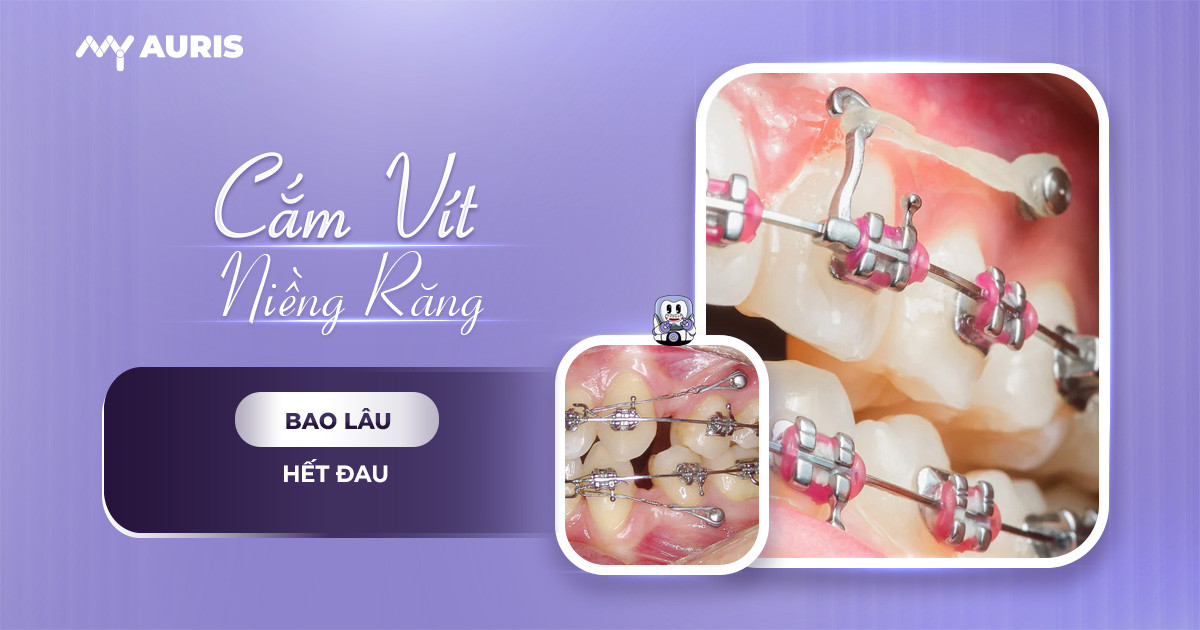
Braces are a long-standing orthodontic solution, favored for their lasting effectiveness. One of the most frequently asked questions is, “How long until orthodontic screws can be removed?” – a question that directly impacts the treatment timeline. In this article, My Auris Dental will provide a detailed analysis of the removal time for orthodontic screws, helping you gain a clear understanding and plan accordingly.
What are Orthodontic Screws?
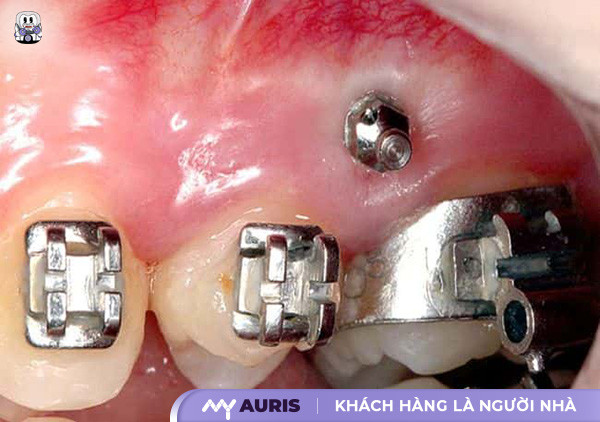
Orthodontic screws, also known as orthodontic mini-screws (minivis), are a modern technique in the field of orthodontics. These tiny spiral screws are made from titanium, a highly biocompatible material, ensuring safety when used in the mouth. However, many people often confuse minivis with mini implant posts, two appliances with different structures and functions.
To differentiate between minivis and mini implants, one can look at the design of the post head. Mini implant posts typically have a round and tapered head, whereas the design of an orthodontic screw (minivis) is more concave to anchor springs, increasing anchorage during orthodontic treatment. Notably, some types of minivis also feature a hook hole to optimally assist in tooth traction.
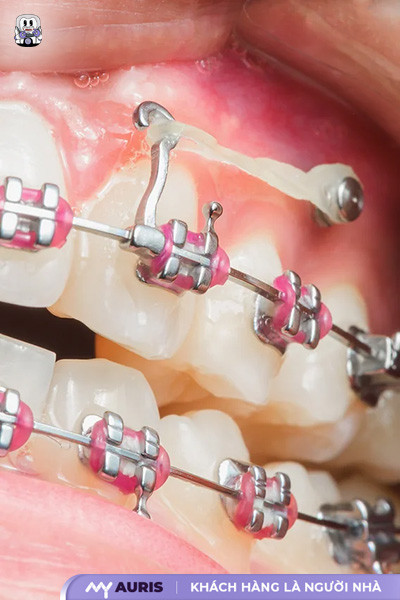
As is known, braces are an effective orthodontic solution for conditions such as buck teeth, underbites, crooked teeth, and misaligned teeth. During treatment, dentists use various orthodontic appliances like brackets, archwires, elastic bands, and sometimes minivis. While not all orthodontic cases require screw placement, in complex situations, using minivis helps control the traction force, significantly enhancing orthodontic effectiveness.
Orthodontic screw placement is a procedure where a screw is inserted into the patient’s jawbone to create an anchorage point for the braces, helping to move teeth into the correct position with optimal screw effect. This method is often applied in metal braces, with an average of about 4 screws, evenly divided between the two arches. However, the number and duration of screw placement will be determined by the dentist after examination and personalized consultation, depending on each patient’s dental condition.
When is Orthodontic Screw Placement Needed to Enhance Orthodontic Effectiveness?
Orthodontic screw placement is an indispensable appliance in difficult orthodontic cases, helping to increase orthodontic effectiveness and significantly reduce treatment time. However, not every orthodontic case requires screw placement. Depending on the specific dental condition, the dentist will make appropriate indications. Below are common situations where minivis are needed:
Protruding, Buck, or Flared Teeth
When teeth are protruding or buck, the dental arch is unbalanced, often leading to aesthetic concerns and loss of confidence. Braces with a system of brackets and archwires can pull teeth into their correct positions. However, in cases of severe misalignment or excessive flaring, screws are needed to create fixed anchorage, increasing traction force and supporting more effective tooth alignment.
Gummy Smile, Long Clinical Crowns, or Short Anatomical Crowns
Orthodontic screw placement helps to straighten tooth axes, intrude teeth, and adjust the jaw to bring the bite to the correct proportion. This solution is very suitable for individuals with gummy smiles, long clinical crowns with short anatomical crowns, or severe deep bites, contributing to improved aesthetics and chewing function.
Excessively Stiff Jaw Arch, Difficult Tooth Movement
In cases where the jawbone is too dense, tooth movement is often slow and challenging. Orthodontic screw placement helps to close extraction spaces, while also shortening treatment time, optimizing the effectiveness of tooth alignment, and minimizing crowded teeth and malocclusion.
Tooth Loss, Especially of the 6th Tooth
If a patient has lost a tooth, such as the 6th tooth, placing a screw as an anchorage point will help the orthodontic process proceed more smoothly, ensuring evenly distributed and stable traction force.
Cases Requiring Extraction of the 4th or 5th Tooth
Extraction of the 4th or 5th tooth is often a necessary step to create space for tooth movement. However, if combined with an excessively stiff jaw arch, tooth movement will be hindered. In such cases, minivis help to rapidly close the spaces, shorten orthodontic treatment time, and deliver a more perfect smile.
Does Orthodontic Screw Placement Hurt?
Orthodontic screw placement (minivis) is a common procedure in orthodontics that helps increase the effectiveness of tooth movement. However, many people still wonder: does orthodontic screw placement hurt?
In reality, inserting a minivis involves placing a small “foreign object” into the jawbone structure, so a mild aching sensation is hard to avoid. Nevertheless, you don’t need to worry too much, as during the procedure, the dentist will administer a local anesthetic, making the area where the screw is placed slightly numb, so you won’t feel any sharp pain.
After the anesthetic wears off, you may start to feel some pain, but this is a normal bodily reaction. To manage the pain and prevent infection, the dentist will prescribe appropriate antibiotics, anti-inflammatory drugs, and pain relievers. Simply take the correct dosage and follow the dietary restrictions as instructed, and the pain will quickly subside.
How long does pain from orthodontic screw placement last? Typically, the pain lasts for the first day and then gradually decreases. The level of pain can vary depending on each individual’s jawbone structure. If the jawbone is soft or porous, the pain sensation will be milder. Conversely, if the jawbone is hard, you may experience cheek swelling, cheek scratches, or a bit more pain.
However, rest assured that pain from screw placement is only temporary. Pain management after screw placement is now more effective thanks to modern anesthetic techniques and optimized medication protocols. Therefore, if you are considering orthodontic treatment with screws, don’t let the fear of pain hinder your journey to improving your smile.
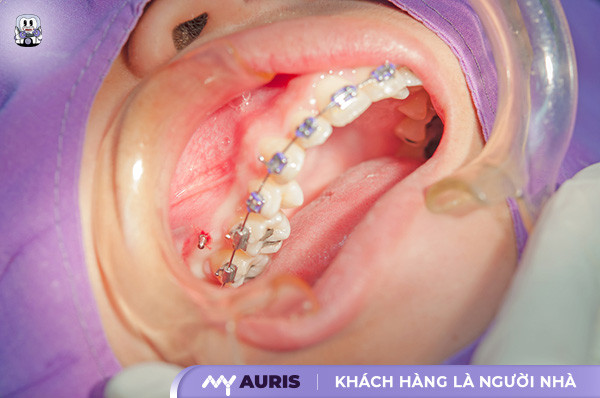
Advantages of Orthodontic Screw Placement
Orthodontic screw placement is an important supporting technique in the process of braces, offering many practical benefits for treatment. Specifically:
Increased treatment effectiveness, shortened bracing time: By acting as a stable anchorage point, screws help secure teeth and precisely guide tooth movement to the correct position on the arch, thereby accelerating the bracing process by 3 to 6 months.
More precise bite correction: With the ability to control archwire traction forces stably and appropriately, embedded screws are particularly effective in cases of crooked or misaligned teeth, significantly improving the bite.
Risk prevention and mitigation of adverse effects: Screw placement helps ensure that orthodontic forces are appropriately distributed, limiting risks during the bracing process, such as incorrect tooth movement or bite misalignment.
Absolutely safe material: The screws are crafted from pure titanium, which does not irritate soft tissues in the oral cavity, ensuring safe use, even for individuals with sensitive constitutions.
Effective support for treating buck teeth and underbites: Notably, this technique optimally addresses buck teeth and underbites, achieving effective orthodontic results in a short period.
Orthodontic screw placement is not just a supportive step in treatment, but also a decisive factor in the precision and completion time of the bracing process. Applying this technique correctly will result in straight, beautifully aligned teeth, a perfect bite, and a more confident smile.
How Long Until Orthodontic Screws Are Removed?
How long until orthodontic screws are removed? This is a common question from many people undergoing orthodontic treatment. In reality, the removal time for orthodontic screws is not fixed but depends on the treatment progress, the goals of tooth adjustment, and the teeth’s ability to adapt to the pressure from the braces.
Time for Orthodontic Screw Placement and Removal
- The placement of orthodontic screws typically takes 1–2 hours, depending on the number of screws, their position, and the jawbone structure. This process is painless, thanks to local anesthesia and precise manipulation by an experienced dentist.
- The removal of orthodontic screws is quite quick, averaging 5–10 minutes per screw, not including surgical preparation time, anesthesia for removal, and oral hygiene. Once the desired adjustment results are achieved, the dentist will proceed to remove the orthodontic screws and transition to the retention phase, which helps maintain the adjusted results and prevents teeth from returning to their original positions.
Typically, orthodontic screws are kept in place for 12 to 24 months to ensure optimal orthodontic effectiveness.
Regular Orthodontic Adjustment Schedule
After screw placement, you will need regular orthodontic adjustments every 4–8 weeks, depending on the changes in your teeth and their adaptation rate to the orthodontic appliances. Adhering to the appointment schedule will ensure high treatment effectiveness and adherence to the plan.
To know exactly how long orthodontic screws will be in place before removal, you should visit reputable dental clinics for a comprehensive dental assessment, in-depth dental consultation, and a suitable treatment plan. The dentist will closely monitor the adjustment process, thereby determining the correct time for screw removal, ensuring safety and long-term results.

Important Notes for Protecting Sensitive Oral Areas
After orthodontic screw placement, the oral area becomes particularly sensitive and prone to injury if not properly cared for. Implementing appropriate supportive measures not only helps reduce swelling and pain but also promotes rapid and safe recovery. Here are some important notes you should remember:
Apply ice packs to the swollen or painful area during the first 1-2 days after screw placement to effectively reduce inflammation.
Strictly follow your dentist’s instructions throughout the oral care process.
Maintain a healthy diet, prioritizing soft, easy-to-chew, and nutrient-rich foods to support better body recovery.
Practice proper oral hygiene, avoiding vigorous brushing or rubbing in the area with the screw to minimize the risk of infection.
Use prescribed pain relievers if you experience excessive discomfort; avoid self-medicating with unknown drugs.