


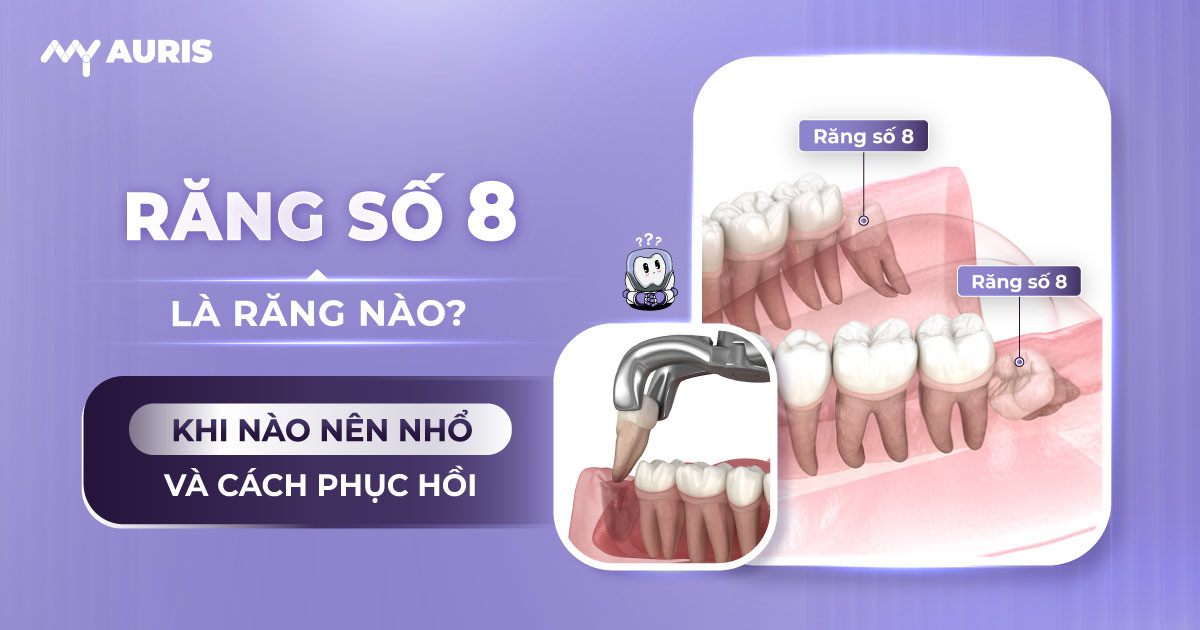
Over 90% of the global population possesses wisdom teeth – also known as third molars. Typically, each person develops between 1 and 4 wisdom teeth between the ages of 17 and 25. However, because wisdom teeth often erupt impacted, partially erupted, or misaligned, causing pain, inflammation, or affecting adjacent teeth, many people are forced to have them extracted to protect their long-term oral health.
What are Wisdom Teeth?
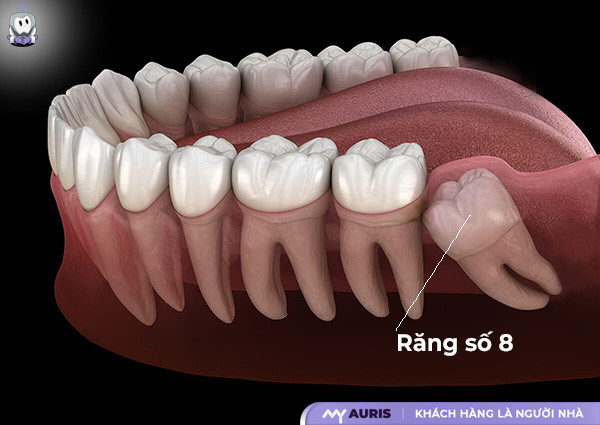
Wisdom teeth (or third molars) are the last teeth to erupt in the adult dental arch, usually appearing between the ages of 17 and 25. They are called “wisdom teeth” because they emerge when individuals have reached adulthood. Each person can develop one to four wisdom teeth, located at the very back of both the upper and lower jaws. In some cases, these teeth may not erupt at all or remain impacted beneath the gums.
Wisdom teeth belong to the group of large molars, but unlike other molars, they do not have corresponding baby teeth in childhood. When erupting, these teeth tend to grow crooked, impacted, or crowded with other teeth. This can easily lead to pericoronitis (inflammation of the gum tissue around the tooth), jaw swelling, and prolonged pain. Due to their deep location in the chewing system, cleaning wisdom teeth is very difficult, which can easily lead to tooth decay, periodontitis, and other complications.
When Do Wisdom Teeth Start to Erupt?
Typically, wisdom teeth begin to erupt between 18 and 25 years old, although some cases may see them emerge as early as 16 or as late as 30. The eruption process can last several months or even years, depending on the individual’s jawbone structure, their position at the back of the jaw, and their overall chewing system.
Some people will never develop wisdom teeth. This is a normal phenomenon and does not affect chewing function, as these teeth do not support mastication like other large molars. Furthermore, some individuals may develop two wisdom teeth on one side, leading to bite misalignment (malocclusion) or increasing the risk of impaction and pericoronitis.
Signs That Wisdom Teeth Are Starting to Erupt
When wisdom teeth begin to emerge, you may experience:
- Pain in the back of the jaw
- Jaw swelling, difficulty opening the mouth
- A slight tear in the gum tissue, caused by the tooth pushing through the gum flap
- Tooth eruption causing mild fever, headache, and fatigue
These symptoms usually last from a few days to several weeks. If the tooth is impacted or misaligned, wisdom tooth pain can become a prolonged, persistent ache. In such cases, it is necessary to visit a dental clinic for an X-ray examination by a dentist to determine the course of treatment.
Why Do Erupting Wisdom Teeth Cause Pain?
Pain caused by erupting wisdom teeth is a common condition in adults. These are the last permanent teeth to emerge, typically appearing between the ages of 18 and 25. Due to their late eruption, there often isn’t enough space in the lower or upper jaw, making wisdom teeth prone to erupting crookedly, impacted, or horizontally. This leads to prolonged pain, affecting the chewing system and the overall health of the adult dentition.
Are Impacted or Misaligned Wisdom Teeth Dangerous?
Misaligned wisdom teeth can press against the second molar (tooth number 7), causing prolonged pain, bite misalignment, and applying pressure to the upper or lower jaw depending on their position. If impacted, these teeth can cause jaw swelling, throbbing pain, pericoronitis, or create deep inflammatory pockets under the gums. In severe cases, widespread infection can affect the inferior alveolar nerve or lead to jawbone resorption. These complications not only cause pain but also pose high risks if not addressed promptly by a dental professional.
If you have misaligned or impacted wisdom teeth, actively seek examination at dental clinics to get an X-ray and accurately assess the tooth’s position. Depending on the degree of misalignment and its impact, the dentist may recommend monitoring or performing minor surgery to extract the wisdom tooth. In most cases, wisdom tooth extraction is a safe measure to prevent complications such as periodontitis, abscesses, or jawbone resorption.
What Medication Is Effective for Wisdom Tooth Pain?
Using the correct medication not only helps relieve pain but also limits complications, especially while awaiting wisdom tooth extraction.
Over-the-counter pain relievers
Paracetamol (Acetaminophen): This is a safe option suitable for most adults. The usual dose is 500mg, taken every 4–6 hours, not exceeding 4g per day.
Ibuprofen: Provides both pain relief and mild anti-inflammatory effects. Typically taken in doses of 200–400mg every 6–8 hours. Note: Do not use if you have stomach conditions.
Naproxen: Has a longer-lasting effect than Ibuprofen, but you should consult a doctor before use.

Antibiotics (only used if there are signs of inflammation)
Amoxicillin: Indicated if there is swelling, pus, or pericoronitis. Typically, 500mg is taken 2–3 times a day for 5–7 days.
Metronidazole: Often used in combination with other antibiotics for anaerobic infections.
Some products, such as gels containing benzocaine, help temporarily numb the gum area. Apply directly to the painful area, avoid swallowing.
Should Wisdom Teeth Be Extracted?
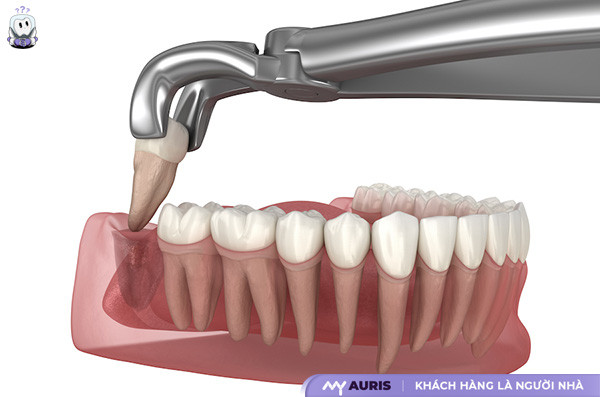
In most cases, dentists recommend extracting wisdom teeth when they are misaligned, impacted, or lack clear chewing function. Wisdom teeth generally do not participate in the chewing system and carry a high risk of causing periodontitis, jawbone resorption, or affecting the inferior alveolar nerve. When extracted at the right time, you can avoid serious complications and recover more quickly. Wisdom tooth extraction is now performed safely, with minimal pain, and heals quickly with proper care.
Cases Where Wisdom Teeth Should Be Extracted
Misaligned or impacted wisdom teeth: If a wisdom tooth grows diagonally, tilted, or doesn’t fully erupt through the gum, it can push against the second molar (tooth number 7), creating pressure and causing bite misalignment (malocclusion). This affects the entire adult dentition and the craniomaxillofacial system.
Causing prolonged pain or pericoronitis: Persistent pain from an erupting wisdom tooth is a warning sign of inflammation. If accompanied by jaw swelling, difficulty opening the mouth, fever, or pus, immediate minor surgery is needed to prevent the infection from spreading.
Affecting jawbone structure or nerves: In some cases, wisdom teeth erupt deep beneath the lower jaw arch, close to the inferior alveolar nerve. If left untreated, this can cause nerve damage, lip numbness, or loss of sensation on half of the face.
No chewing function and prone to bacterial accumulation: Wisdom teeth often do not participate in chewing and are located at the back of the jaw, making them difficult to clean. This situation easily leads to tooth decay and periodontitis in both the wisdom tooth and the adjacent second molar (tooth number 7).
When Is Wisdom Tooth Extraction Not Necessary?
Straight, pain-free eruption: If a wisdom tooth erupts correctly, is not covered by gum tissue (pericoronitis-free), does not impinge on adjacent teeth, and is easy to clean, you may be able to keep it. However, regular follow-ups with a dentist are necessary to ensure no complications arise later.
Individuals with unstable systemic diseases: Patients with cardiovascular disease, diabetes, or bleeding disorders need careful consideration before extraction. In such cases, the dentist will coordinate with other specialists to ensure safe management.
Un-erupted teeth with no pain: Some people may have wisdom teeth fully embedded in the bone without causing any symptoms. In such cases, you only need regular X-rays for monitoring and immediate intervention is not required.
Wisdom Tooth Extraction Procedure at the Dental Clinic
Step 1: General Examination and X-ray Imaging
The dentist performs a general oral examination to assess the condition of the wisdom tooth. Subsequently, X-ray imaging helps precisely determine the wisdom tooth’s position in the lower or upper jaw, the degree of misalignment, its impact on the second molar (tooth number 7), the inferior alveolar nerve, or the jawbone. X-ray results also help differentiate between straight, impacted, or supernumerary wisdom teeth. Based on this, the dentist determines whether extraction or monitoring is indicated.
Step 2: Consultation and Agreement on Treatment Method
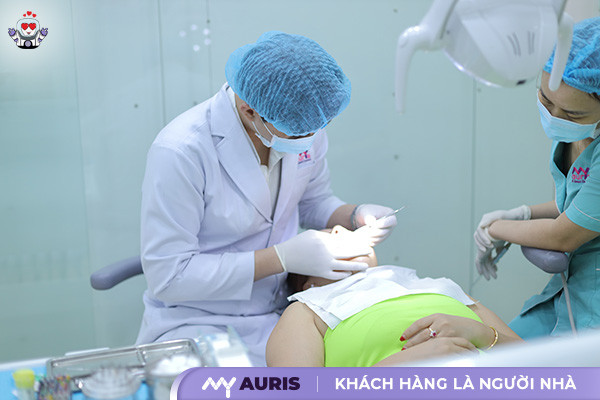
After reviewing the X-rays, the dentist will provide detailed consultation regarding the wisdom tooth’s condition, risks of pericoronitis, periodontitis, wisdom tooth pain, or jaw swelling. The patient will receive a thorough explanation of the surgical procedure, dental instruments used, execution time, and healing period. Here, patients are also advised on health preparation, such as eating a light meal before extraction, getting adequate rest, and avoiding anticoagulant medications (if prescribed).
Step 3: Anesthesia of the Wisdom Tooth Area
The dentist uses local anesthetic to minimize pain sensation. The numbing process usually takes a few minutes. Thanks to modern anesthetic technology, most patients do not experience pain throughout the extraction procedure. This factor helps ensure a painless and safe extraction for the patient. Some large dental clinics may use automated anesthetic delivery systems to precisely control the dosage.
Step 4: Performing the Wisdom Tooth Extraction Surgery
The dentist proceeds with gum incision (if necessary), tissue dissection, and uses specialized instruments to loosen the wisdom tooth. In many cases of misaligned or impacted teeth, the dentist will divide the tooth into several smaller sections for individual removal. This is a common technique for extracting wisdom teeth impacted within the jawbone. After removing the tooth, the dentist cleans the socket, removes inflamed tissue, and checks the surrounding nerves.
Step 5: Wound Suturing and Aftercare Instructions
Finally, the dentist sutures the soft tissue if necessary and instructs the patient to bite on a sterile gauze pad for 30 minutes to control bleeding. Afterward, the patient receives instructions on using pain relievers like Paracetamol (Acetaminophen), anti-inflammatories like Amoxicillin, and other post-operative care guidelines. This stage is crucial for preventing post-extraction infection and promoting rapid recovery.
Step 6: Follow-up Appointment
5 to 7 days after extraction, patients need to return to the clinic for a wound check. The dentist will assess the healing progress, remove non-dissolvable sutures if used, and provide further care instructions. If swelling, fever, or prolonged pain is observed, the patient should return for an earlier follow-up to prevent complications.

How to Care for Wisdom Teeth After Extraction
Patients need practical, specific knowledge and must adhere to the dentist’s instructions to avoid post-extraction infection, jaw swelling, or jawbone resorption.
After extraction, the dentist will place sterile gauze in the tooth socket. You need to bite firmly on the gauze for about 30–45 minutes to help form a blood clot. Absolutely do not spit or rinse vigorously within the first 24 hours, as this can dislodge the blood clot, leading to prolonged bleeding and exposing the jawbone, causing pain.
Within the first 6–12 hours after extraction, apply a cold compress to the outside of your cheek, corresponding to the extraction site. This helps effectively reduce swelling and pain. Each application should last 10–15 minutes, with a break of about 20 minutes between applications. Absolutely do not use hot water, as it can dilate blood vessels and increase bleeding.
Avoid strenuous activity, exercise, or sudden bending after tooth extraction. Pressure on the chewing system, especially the lower jaw, can easily damage the recently operated area. When sleeping, it is advisable to keep your head elevated to prevent blood from pooling in the freshly extracted area.
Most patients will be prescribed pain relievers like Paracetamol (Acetaminophen), antibiotics like Amoxicillin, and non-steroidal anti-inflammatory drugs to prevent infection and reduce swelling. Do not self-medicate without prior prescription. If you experience severe wisdom tooth pain 2–3 days after extraction, you should revisit the clinic to check for the risk of dry socket.
On the first day, consume liquid foods such as cool porridge or soup. Avoid hot, spicy, hard, or crumbly foods that can easily get lodged in the tooth socket. After 48 hours, you can switch to soft foods like mashed rice or vermicelli, avoiding chewing on the side where the wisdom tooth was extracted. Avoid using straws or smoking, as they can dislodge the blood clot.
Rinse your mouth with physiological saline (salt water) 24 hours after the extraction. Use a soft-bristled toothbrush and brush gently, avoiding the newly extracted area. Thoroughly clean the second molar (tooth number 7) and adjacent large molars to prevent bacterial spread. Absolutely do not use toothpicks or sharp objects to probe the tooth socket.
After extraction, if you experience symptoms such as pain lasting more than 3 days, bad breath, fever, uncontrolled bleeding, or significant swelling on one side of the face, you need to visit a dental clinic immediately. These could be signs of dangerous complications such as periodontitis, pericoronitis, or widespread infection.
Typically, the dentist will request a follow-up appointment 5–7 days later to check wound healing and clean the extraction site. In some cases, sutures may need to be removed if non-absorbable stitches were used. This is a necessary step to ensure you do not experience residual wisdom tooth fragments, hidden infections, or adverse effects on adjacent smaller molars.
Frequently Asked Questions about Wisdom Teeth
Is an X-ray necessary for wisdom teeth?
X-ray imaging of wisdom teeth is necessary in most cases. The film images help the dentist precisely determine the tooth’s position, eruption direction, and its impact on adjacent structures within the craniomaxillofacial system.
The procedure is quite quick. You visit a dental clinic, and the dentist will use a panoramic X-ray machine or a close-up X-ray of the wisdom tooth. The images are processed within a few minutes. The cost of an X-ray is also reasonable, ranging from 100,000 – 300,000 VND, depending on the type of film.
Can two wisdom teeth be extracted at once?
Extracting two wisdom teeth at once is entirely possible if you are in good health and the procedure is performed by a highly skilled dentist. In fact, many people have wisdom teeth erupting symmetrically on both sides of the jaw and all require extraction. In such cases, the dentist may recommend simultaneous extraction to save treatment time, reduce the number of medication doses, and avoid prolonged pain over multiple periods.
However, it’s important to differentiate between extracting two teeth on the same side (left or right) and extracting two teeth symmetrically on opposite sides. In the case of same-side extraction, you will find it difficult to chew food afterward as both the upper and lower teeth on that side will be missing simultaneously. Therefore, many dentists prioritize extracting one tooth on the right side and one on the left side to still ensure temporary chewing function.
Some factors to consider before simultaneously extracting two teeth:
- No history of medical conditions such as diabetes, cardiovascular disease, or bleeding disorders
- Severely misaligned teeth causing prolonged pain
- Having a suitable post-extraction care plan
After extraction, it is necessary to apply proper post-wisdom tooth extraction care, such as cold compresses, restricting chewing on the extraction side, and taking pain relievers like Paracetamol (Acetaminophen) or antibiotics like Amoxicillin as directed by the dentist.
Do straight wisdom teeth need regular monitoring?
Even if a wisdom tooth erupts straight and causes no immediate trouble, you should still actively monitor it. The chewing system and permanent dentition require long-term care; complications should not be left until they arise before being addressed.
Effective ways to monitor wisdom teeth include:
- Regular dental check-ups every 6 months
- Regular X-rays if there are changes
- Cleaning the rearmost teeth with a specialized brush
- Rinsing after meals and using dental floss
Wisdom teeth, also known as third molars, are the last permanent teeth to erupt in the dental arch. However, their appearance often brings various nuisances and poses a potential risk for serious oral health issues such as gum inflammation, tooth decay, or misalignment. A clear understanding of wisdom teeth characteristics and related important considerations will help you proactively manage their care, treatment, and make informed decisions about whether or not to have your wisdom teeth extracted.